
Introduction
Henley Reward Consulting are passionate about supporting employers in the Housing Association market recruit and retain the best talent through the provision of reward insights.
At Henley Reward Consulting, we have extensive experience of supporting clients in the development of competitive, fair and appropriate remuneration & D&I strategies through the provision of independent, quality based quantitative and qualitative data.
Operating across UK&I as well as internationally, we provide much more than data. We pride ourselves in building strong relationships with our clients to fully understand the structure and remit of the organisation, as well as its future vision around its talent pool. This ensures we are benchmarking in the right places, providing information that is fit for purpose now and in the next 12+ months.
We also look to ensure the remuneration outcomes are clearly defined so that you can fully understand the differences and the context between the quartile outcomes (Lower, Median and Upper). This enables you to make decisions confidently, by accurately assessing how roles, structure and accountabilities compare, to make sound recommendations for the future.
Methodology
In Q4 of 2021 Henley Reward Consulting conducted a pay award survey for the social housing sector, reaching out to 100 of the largest Housing Associations in the UK.
The objective of the review was to look to understand what the sector is considering around pay awards for 2022, as well as identifying some of the wider reward priorities as we move into the New Year.
Of the 100 contacted in a 3-week timeframe, 25 responded and completed the survey, as well as a number providing direct feedback through telephone interviews.
Summary of Findings
The below summary provides a highlight of the findings from the sample respondents.
-
Housing Association pay awards averaged 1.4% in 2021.
- 75% of the sample have not had firm agreement on what the final pay award will be for 2022.
-
Pay awards for 2022 are set to be higher in 100% of the sample.
-
Where a pay award has been decided, the average increase is 2.7%
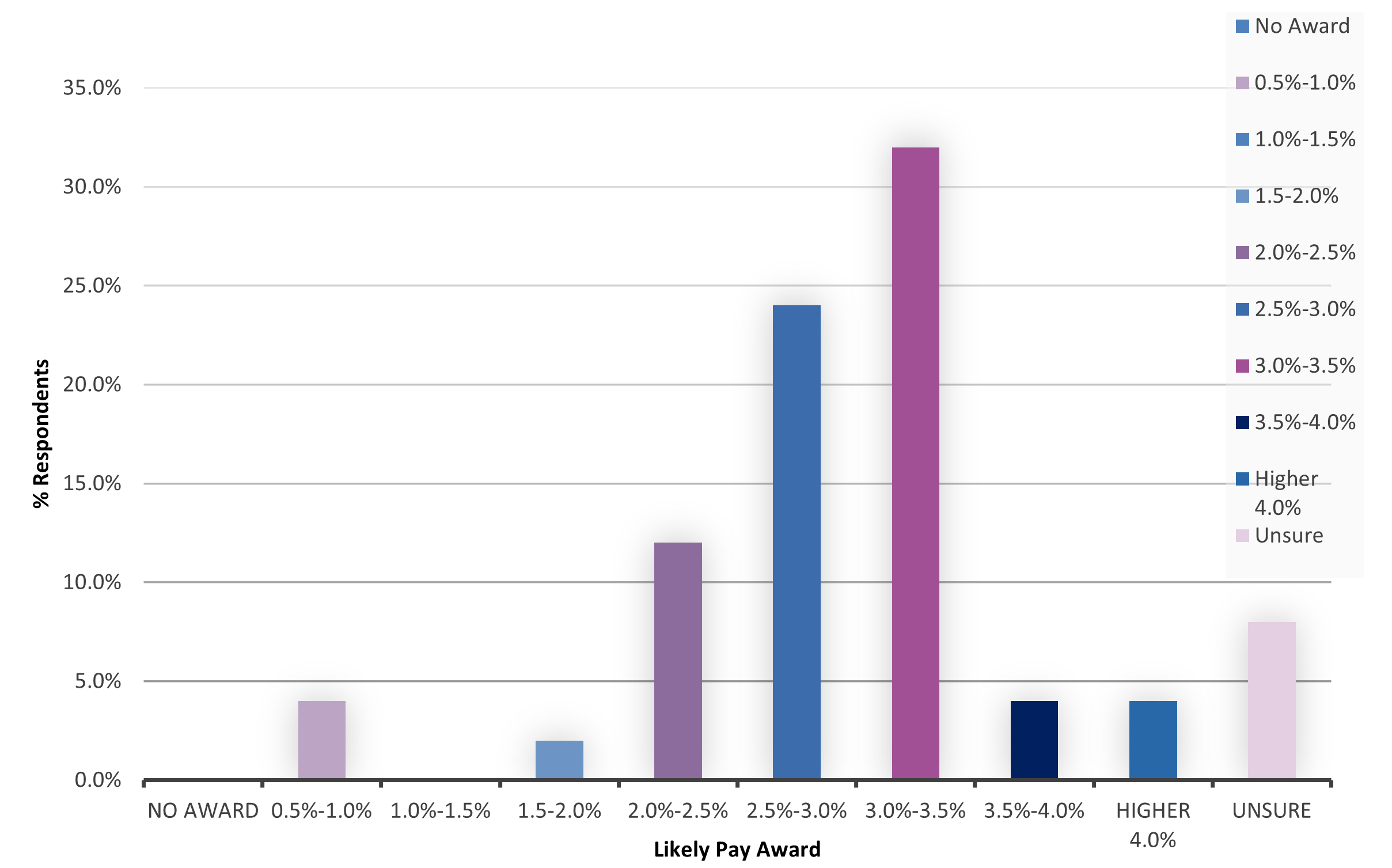
Where a pay award is still to be decided, what will the likely award be for 2022?
Outcomes
Wider Market
As 2021 draws to a close, predictions for 2022 are still in their infancy, but there is an overwhelming agreement across the social housing sector that any pay award will be greater than last year. This echoes the wider market where UK employers are expected to be agreeing on much greater pay rises next year given the restricted pay increases following the onset of the pandemic.
To try and understand the market indicators influencing many decisions, the Consumer Prices Index including owner occupiers’ housing costs (CPIH) rose by 3.8% in the 12 months to October 2021, up from 2.9% in the 12 months to September.¹ The largest upward contribution to the October 2021 CPIH 12-month inflation rate came from housing and household services (1.23 percentage points), with further large upward contributions from transport (1.08 percentage points) and restaurants and hotels (0.43 percentage points). The Consumer Prices Index (CPI), excluding owner occupiers’ housing costs, rose by 4.2% in the 12 months to October 2021, up from 3.1% in the 12 months to September. This is the highest 12-month inflation rate since November 2011, when the CPI annual inflation rate was 4.8%. The retail price index (RPI), which tends to be higher, is now at 6%.
Other considerations for employers saw the National Living Wage (NLW) set to rise to £9.50 from 1 April 2022, representing an increase of 59 pence or 6.6%. In addition, the Health and Social Care Levy Bill (the HSC Levy) which, when enacted, will legislate for the new UK wide levy to help fund health and social care. The proposal sets out that.²
- From 6 April 2022, there will be a temporary 1.25 percent increase in Class 1, 1A and 1B National Insurance Contribution (NIC) rates to 15.05 percent for employers, and in Class 1 NIC rates for employees to 13.25 percent (below the NIC Upper Earnings Limit) and to 3.25 percent (above that limit); and
- From 6 April 2023, the new HSC Levy will apply to both employers and employees (including those above the state pension age) at a rate of 1.25 percent (i.e. a combined rate of 2.5 percent) – Class 1, 1A and 1B NIC rates will then revert to their current levels.
The effect of the new bill on employers will be the expected 1.25 percent increase on budgeted workforce costs from 6 April 2022 which will need to be factored in to any pay award.
XpertHR, the UK’s leading online HR resource, recently published that as we approach the end of 2021, wage settlements are holding steady at 2% for the seventh consecutive rolling quarter, but more than four-fifths of private sector employers expect to increase pay at their next annual review, with the median award set to rise to 2.5 per cent in the year to the end of August 2022, up from the previous year’s median of 1.6 per cent.³ A median increase of 2.5 per cent would return pay settlements to their level two years immediately before the pandemic, when earnings growth was finally picking up after a decade of real-terms stagnation.⁴
Another survey by Willis Towers Watson in August 2021, sees the average annual pay rise being set at 2.9% in 2022, amidst signs of strength in the labour market following the turmoil of the global pandemic. The survey went on to state that the proportion of businesses expecting to freeze pay altogether is set to fall from over 10% this year to 1.7% in 2022.⁵
Driving these increases will be a need to respond to the candidate led market, with organisations struggling to recruit and retain at all levels. That said there is still some caution lingering, impacted by the ongoing pandemic, particularly in certain industries where business volumes are still volatile.
Social Housing Market
From the sample survey, the social housing market will be seeking higher pay awards than last year. Although the majority of the sample had not had their pay award agreed, 32% stated that their award would likely be between 3.0% – 3.5%, followed by 24% at 2.5% – 3.0%. This is in contrast to the average pay award for 2021 being 1.4% from within the sample.
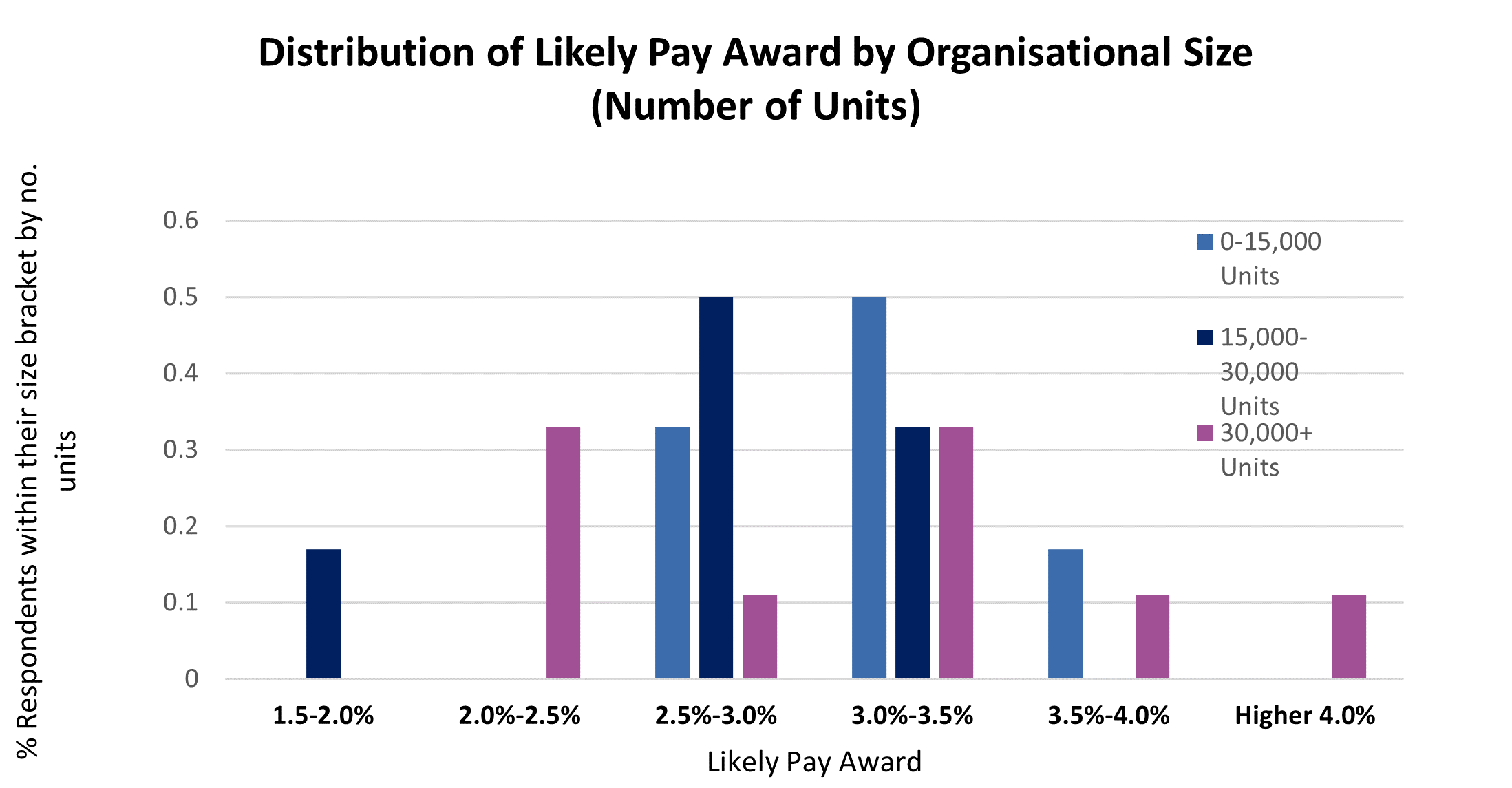
Where able to confirm, pay awards based on organisational size were fairly evenly distributed between those at the 2.5%-3.5% mark, with a small percentage of lower and upper outliers.
Other outcomes from the survey saw that 60% of the sample stated that their Executive leadership team would receive the same pay award. Of the other 40%, 10% confirmed that the Executive team would not receive a pay award, 60% had a different pay setting model for the Executive team and 30% were unsure.
Other considerations saw many of the respondents’ state that their company were Real Living Wage Employers which saw higher increases for those affected employees (to £9.90 across the UK (40p increase), and £11.05 in London (20p increase)). In addition, where companies had a specific recruitment challenge due to pay, then a separate increase was implemented to help mitigate this risk. For example, one respondent stated that a specific employee group within their trades & labour job family would receive an extra 1.6% on top of the company pay award to help them remain competitive.
The recruitment theme was highlighted as the top priority for social housing providers as they look towards 2022, followed closely by retention, health & wellbeing and employee engagement.
Remote Working Policies
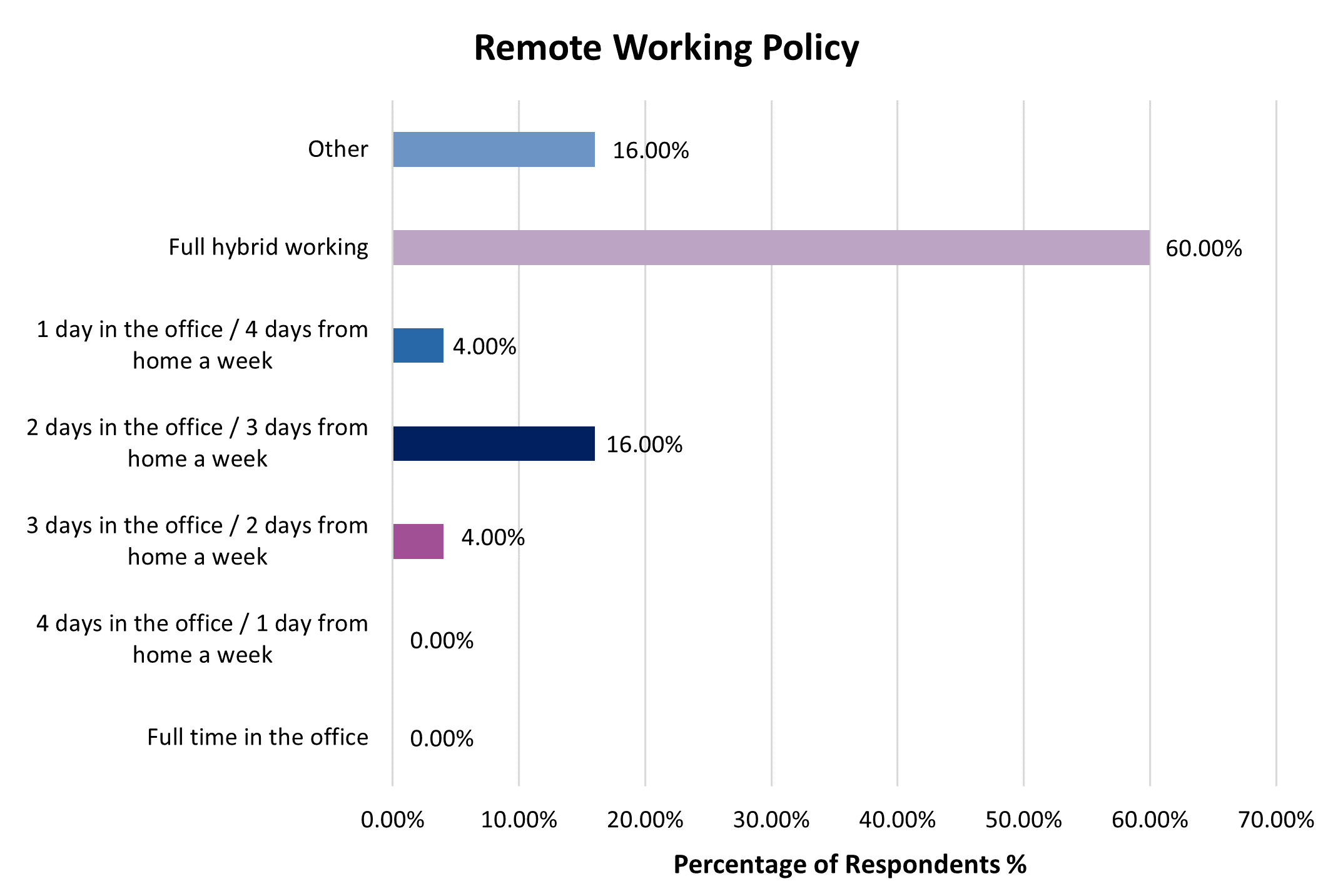
From the sample 60% of the respondents now operate a 100% hybrid working policy, though in a number of cases this was dependent on the employee group, team and work being undertaken to provide a level of flexibility. Where a new remote working policy has been enforced, there has been no change in pay outcomes.
That said, these policies are still being developed, with Flexible Working/Remote Working Policies being the main benefit Housing Associations are looking to reassess/promote in the next 12 months at 25% of the respondents.
Interestingly Pension Provision was the next area of focus, at 21% of the sample.
Top HR Priority for 2022
- Recruitment 36%
- Employee Engagement 12%
- Retention 12%
- Health & Wellbeing 12%
Henley Reward Consulting: The Need to Benchmark
Housing Associations are navigating a difficult tightrope: increased regulation, government initiatives, sustainability objectives and investment outlay around their asset and development targets, coupled with supply chain shortages across materials and labour. But also shifting tenant and care needs, with greater multichannel engagement requirements is creating a new era in digitalisation across the sector. The need to have an agile, committed workforce is essential to meet these pressures. By understanding the reward environment and candidate expectations, Housing Associations can look to compete and retain the right talent first time. This also isn’t just about basic salaries, but the wider benefits piece to help ensure employees are supported and have a positive working environment.
Benchmarking
Benchmarking provides a baseline in terms of designing reward strategies. A tailored benchmarking process that is based on numerous business-led factors (size, scale, location, values, job size and own demands) can support organisations make informed decisions on how best to attract and retain the right talent. At Henley Reward Consulting, we understand the importance of real time data and how insights can support an organisation through its journey.
At Henley Reward Consulting our benchmarking provision:
- Supports Housing Associations create strong attraction and retention strategies that reflect their values and ambition – whether this is for a single role, leadership team or full organisational review.
- Provides clear insight into pay, reward and performance mechanisms, as well as how structures and role accountabilities are evolving in the wider market, taking into consideration aspects such as career development, job size and employee expectations.
- Provides accurate insight into how competitive your reward structures are against the market, highlighting areas of risk and comparability.
For further information, please contact Louise Haines, Managing Director of Henley Reward Consulting on louise.haines@henleyrewardconsulting.com or +44 (0)7798 630 382
¹ Consumer price inflation, UK – Office for National Statistics
² The new Health and Social Care Levy – KPMG United Kingdom (home.kpmg)
³ Pay awards set to reach 2.5% by August 2022 – Employee Benefits
⁴ UK employers ready to increase pay in order to keep staff | Financial Times (ft.com)
⁵ UK businesses plan 2.9% pay rises in 2022 as optimism returns – Willis Towers Watson